RPACT Code alpha

Daniel Sabanés Bové

RPACT

Friedrich Pahlke
Anoop Rawat
Deniz Aydoğdu

October 27, 2026

Introducing the RPACT Code engineers

Anoop Rawat

Product Innovation Lead at RPACT

  • Leads prototyping of new products and AI applications
  • Previously at Cytel (5+ years): trial design simulation algorithms and product prototypes
  • Earlier: RCT design and analysis at J-PAL; data science at Mu Sigma

Deniz Aydoğdu
AI Engineering Intern at RPACT

  • Builds and maintains the RPACT Code AI assistant
  • Pursuing MSc in Bioinformatics, interested in AI applications in healthcare and genomics
  • Background in Statistics and Biology, bridging quantitative methods with life sciences

Why RPACT Code?

  • Statisticians and clinicians would like an easy interface to clinical trial design, simulation and analysis
  • While we offer RPACT Cloud as a graphical user interface for rpact, in the age of ChatGPT and Claude, users are looking for a conversational interface
  • RPACT Code aims to be the purpose built, high quality and (in the end) validated, AI assistant to achieve this objective

Why not just Claude or ChatGPT?

  • General AI chat assistants like ChatGPT will provide some answers to clinical trial statistics questions … but they don’t run R code, they code any calculations from scratch (in Python), and will usually not give helpful or reproducible results (see e.g. Dobler et al. (2025))
  • General AI agents like Claude Code are typically run in integrated development environments (IDEs) like VS Code or Positron, which might be a hurdle for some users
  • Both lack domain specific context and workflows tailored to clinical trial statistics

Building our own agent = LLM + harness
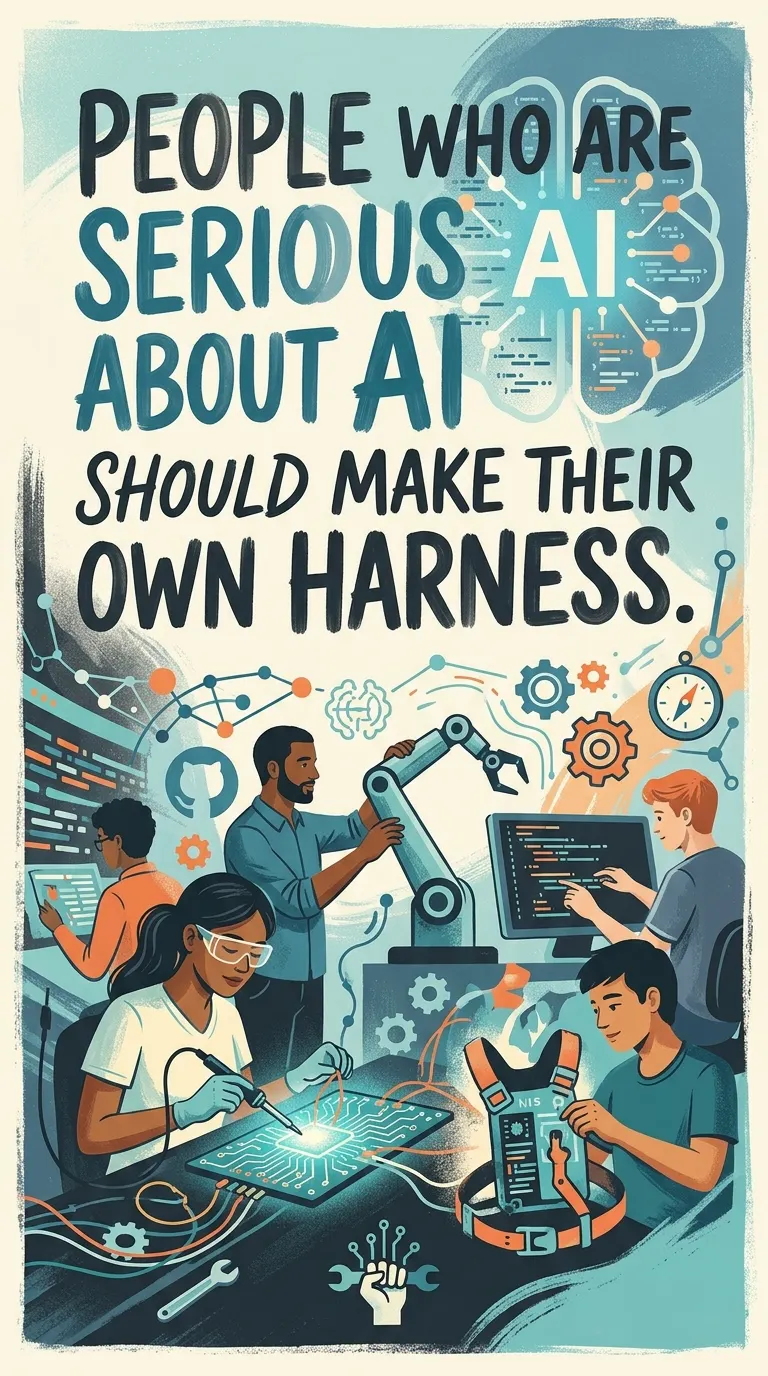
From deepgains.substack.com/p/people-who-are-serious-about-ai-should

Unique context for RPACT Code

We provide our agent with unique and internal context specific to RPACT Code, including:

  • rpact vignette sources
  • rpact function and parameter documentation
  • rpact validation documentation, incl. functional specification and formulas
  • rpact test code
  • rpact source code
  • The accompanying book sources (Wassmer and Brannath 2025)

This can be complemented with company specific documents such as statistical section in protocol templates, standard operating procedures, and internal guidelines.

Statisticians in the loop and in the lead

Still, LLMs will hallucinate sometimes, and also with the best context, errors will still occur.

We are therefore keeping statisticians in the loop and in the lead:

  • Automatic review button suggest first initial agent review of produced results
  • Statistician review button then allows manual review and approval of the agent’s results

This can be customized to the company needs, e.g. send email to distribution list, create an issue on a task board, etc.

Internal deployment as secure option

Similar like RPACT Cloud, we plan to offer RPACT Code as an internally deployable solution, ensuring that sensitive data and proprietary information remain secure within the company’s infrastructure.

  • Bring your own LLM: e.g. in your own VPC (Virtual Private Cloud) such as AWS Bedrock, ensuring that the language model runs within your secure infrastructure.
  • On-premise computing: deploying RPACT Code on local servers within the company’s infrastructure, ensuring full control over data and computational resources.
  • Docker containers: packaging RPACT Code and its dependencies (e.g. data base for storing conversations) into Docker containers could be one possible technical solution.

Status of our alpha version

Our prototype for RPACT Code is in alpha stage, meaning it is functional but still under active development and testing.

  • We want to show it very early to you today to gather feedback on the idea, and potential features you would like to see in the next beta version
  • Lots of things are not yet available of course (e.g. data analysis, upload of user context files)
  • In particular we hope we an co-develop the company internal deployment interface and solution together

Today’s first conversation

  • Let’s play with RPACT Code!
  • What is surprising to you?
  • What would you like to use it for next?
  • Do you have some “crazy” ideas or use cases in mind?

People collaborating

References

Dobler, Dennis, Harald Binder, Anne-Laure Boulesteix, et al. 2025. “ChatGPT as a Tool for Biostatisticians: A Tutorial on Applications, Opportunities, and Limitations.” Statistics in Medicine 44 (23–24): e70263. https://doi.org/10.1002/sim.70263.
Wassmer, Gernot, and Werner Brannath. 2025. Group Sequential and Confirmatory Adaptive Designs in Clinical Trials. 2nd ed. Springer. https://link.springer.com/book/10.1007/978-3-031-89669-9.